
Retail Isn’t Changing Slowly Anymore; It’s Sprinting
Let’s be honest.
If you’re in retail right now, you can feel it; things aren’t evolving gradually anymore. They’re literally sprinting ahead.
Your customers expect more. They want brands that get them, show up where it matters, and create experiences worth talking about.
Your operations can’t afford waste. You need the right products available at the right time, lower overhead, and accessibility that doesn’t sleep.
And technology? It’s no longer nice-to-have. It is the central nervous system of your retail endeavour that connects your mission, vision, and operations with your loyal regulars to drive lasting, gainful CLV.
Here’s the big question, though: Are you ready for how retail will actually function in 2026?
Because 2026 isn’t just another business year. It’s when many of today’s experiments, like AI, automation, and experiential formats, move from optional to expected and from beta testing to reality.
In 2025, 76% customers were inclined to buy from brands that offered personalized experiences, and 90% marketers reported that personalization improved profitability.
While these trends would continue as top competitive differentiators in retail 2026, here is a complete spectrum of 10 trends that will shape how you sell, operate and win in retail next year.
Source : Personalization
Trend 1: Hyper-Personalized Shopping Journeys
Imagine this, a customer opens your app or walks into your store; you recognize the customer and instantly access their purchase history and preferences; an automated system suggests relevant products, assists through check-out and links loyalty points seamlessly.
All that your customer needs to do is be present, and everything feels relevant. The products, the offers, even the timing. That’s hyper-personalization in 2026.
You’re no longer guessing what your customer might like. AI-driven recommendation engines are doing that work for you, using browsing behaviour, purchase history, location and real-time signals.
Companies that excel at personalization generate up to 40% more revenue than their un-personalized counterparts. (Ref )
And it gets more granular. Instead of broad segments like ‘women 25 to 35’, retailers are building micro-segments, thousands of them, that update constantly.
For you, this means better conversion, higher basket sizes, and fewer wasted promotions.
Trend 2: Experiential Retail 2.0 – Retailtainment No Gimmicks
Here’s a truth many brands have learned the hard way: Customers don’t want gimmicks. They want meaningful experiences.
In 2026, experiential retail isn’t about forcing AR or VR into stores. It’s about participation.
Imagine hosting:
- Live demos
- In-store workshops
- Community events
- Expert consultations
This is where ‘retailtainment’ comes in: blending shopping with entertainment to drive engagement. And it works. Studies show that experiential inputs in a store can increase customer dwell time by 40% and sales by 30% compared with non-experiential counterparts.
For you, experiential retail means,
- customers stay in your store for longer
- you get a stronger brand recall, and
- customers always return because they enjoyed being there.
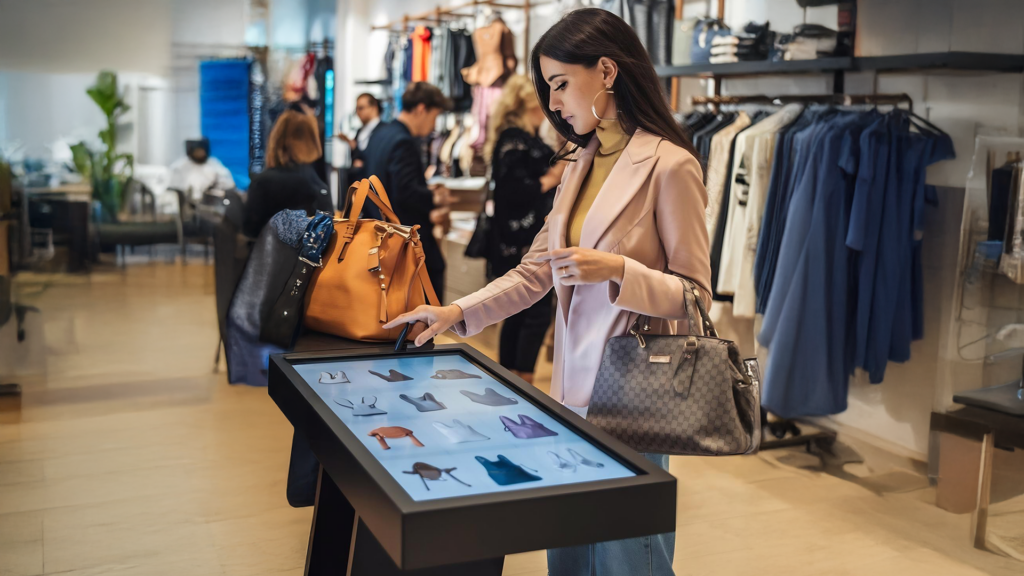
Source : Experiential retail
Trend 3: Automated Smart Stores – No More Cashiers!
Now imagine this, your customers walk in, pick what they need, and walk out, no checkout line, no waiting. That’s not the future. That’s already happening.
Cashier less smart-store formats are expanding far beyond grocery to include fashion, electronics and convenience retail, which are adopting –
- Smart carts
- Frictionless checkout
- Safe Biometric authentication systems
Did you know automated checkout systems can reduce operational costs by up to 20%?
For you, automation means faster throughput, lower overhead, and happier customers — without compromising experience.
Trend 4: Next-Gen Vending Machines (The Rise of Micro-Stores)
Let’s pause here, because this one matters more than most people realize.
Forget old-school vending machines. In 2026, AI-powered smart experiential vending systems will pose as compact retail stores.
Imagine placing premium beauty products, skincare, FMCG minis, or luxury impulse items in locations that are otherwise inaccessible to full-format physical stores, like
- Airports
- University Campuses
- Corporate offices
- In transit Hubs / Metro Stations
- Events, etc.
These machines support digital payments, track inventory in real time and even recommend products. With 2026 ushering in enhanced AI, we can expect wider use of engaging features in vending machines, such as facial / voice recognition, digital consultations, etc.
Did you know the smart vending market is expected to reach USD 47.25 billion by 2034, growing at 14.7% CAGR?
This isn’t about replacing stores or competing with e-commerce. It’s phygital retail that bridges both: physically accessible, digitally intelligent, delivered through automated infrastructure running 24/7.
These machines create experiential moments: interactive discovery, virtual try-ons, and gamified engagement that turn transactions into brand experiences.
For you? Brand presence without traditional overhead. Real-time control. Scalable operations.
For customers? Products when needed. Engagement worth remembering. Zero friction from interest to purchase.
Smart vending delivers phygital experiences through automation: visibility, convenience, and engagement with a fraction of the operational weight.
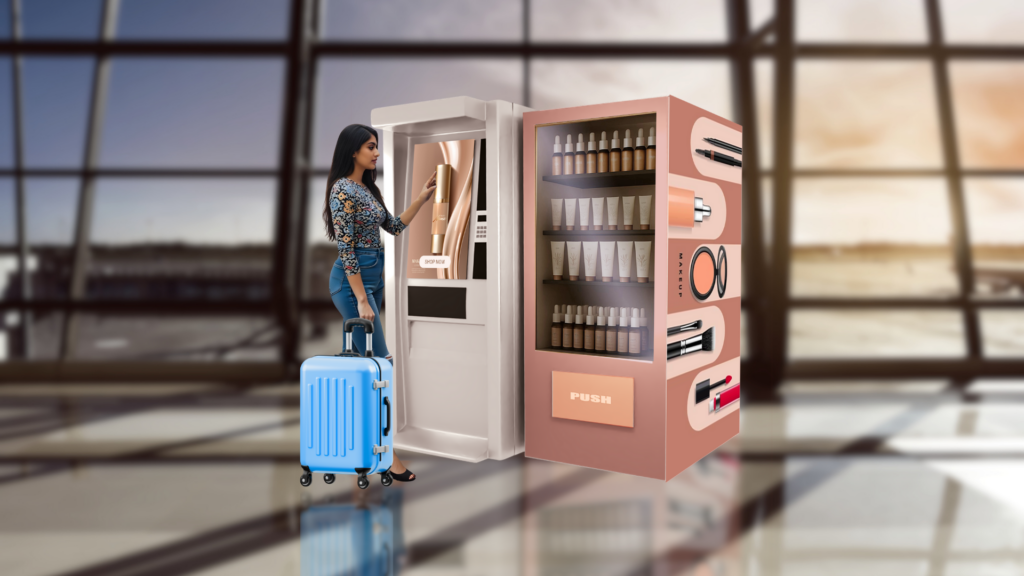
Trend 5: Sustainable & Circular Retail Goes Mainstream
At the brink of 2026, 72% of customers are already buying sustainably, and 54% are ready to pay extra for sustainable choices. Younger shoppers, especially Gen Zs, opt for purpose-driven brands, making them grow 69% faster than competitors. (Ref -)
Consumers are asking questions beyond quality and price these days.
Where was this made? Can it be reused? What happens after?
By 2026, circular retail, resale, refurbishment, and recycling won’t be niche. It’ll be expected.
For you, sustainability is all about trust, differentiation and long-term loyalty, making it a trend you cannot miss in 2026.
Trend 6: Retail Media Networks (RMNs) Take Center Stage
By now, you know how valuable your customer data really is; demographics, purchase history, preferences – everything translates into more revenue per customer.
Retailers in 2026 are all set to cash in on this trend, monetizing their first-party data through Retail Media Networks, sponsored listings, in-store screens, app ads and on-site promotions.
Why are brands shifting budgets here?
Because RMNs offer something traditional ads can’t: clear attribution.
Global RMN ad spend has reached USD175 billion in 2025 and can surpass USD196 billion in 2026, making it one of the highest-margin revenue streams for retailers.
For you, this is a potent additional income stream built into your existing ecosystem.
*(Statistics verified by perplexity)
Trend 7: Social Commerce 3.0 – From Reel to Receipt
Think about how often you discover products on social media.
Now imagine buying them without leaving the app.
In 2025, 82% of consumers search for products on social media (and counting); a good reason why social commerce fetched USD 699.4 billion in 2024 and is estimated to reach USD 8.5 trillion by 2030. *(Statistics verified by Perplexity)
That’s Social Commerce 3.0. Seamless checkout, creator-led discovery and livestream shopping, all in one flow.
Micro-creators are playing a huge role here. Smaller audiences, higher trust. And it works. Social commerce is expected to grow three times faster than traditional e-commerce.
For you, this is a confluence of brand and culture where conversion happens naturally.
Trend 8: Supply Chain Modernization – The Unseen Propellers That Speed CX
What happens behind the scenes matters just as much as what customers see.
Retailers are modernizing supply chains with:
- Tech-driven retail fulfilment
- AI-based demand forecasting
- Automated warehouses
Did you know advanced forecasting can reduce stockouts by 30%? *(Statistics verified by Perplexity)
For you, this means inventory accuracy, fewer stockouts, less overstock and faster last-mile delivery, all without chaos.
Trend 9: Phygital Retail – Thinking Ecosystems, Not Just Stores
Your customers don’t think in channels.
They just want their stores not be restricted to 4 walls or a single screen.
In 2026, successful retailers operate phygital ecosystems in which online and offline are fully connected.
Imagine:
- Browsing online, picking up in-store
- Seeing real-time inventory everywhere
- Using in-store kiosks to access extended assortments
70% of Fortune 500 companies are already using Phygital strategies. That’s not accidental. *(Data verified by Perplexity)
For you, phygital isn’t a strategy; it’s a key catalyst to stay competitive and relevant to new-age buyers.
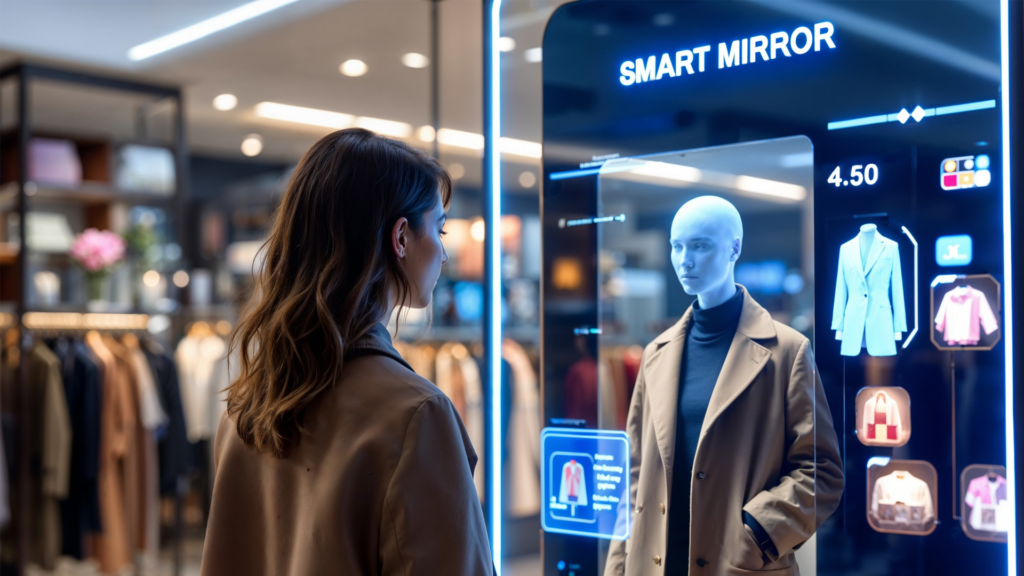
Source : Phygital retail
Trend 10: Subscription & Membership Retail Models
Talking about loyalty, points are no longer enough. Retailers are moving toward paid memberships, subscriptions and auto-replenishment models.
Why?
- Because a well-planned loyalty program can boost revenue per customer by 15% to 25% annually.
- 85% of customers will continue to buy from the brand
- 90% of brands offering loyalty programs experienced increased ROI
For you, this means predictable revenue.
For your customers, it means convenience, trust and consistency.
2026 Belongs to Retailers Who Act Now
Here’s the bottom line.
Retail in 2026 will reward brands that are:
- Data-smart
- Experience-led
- Automation-ready
- Customer-obsessed
You don’t need to adopt everything at once. But you do need to start. Because retail 2026 will not be led by the biggest players, but the ones that are the fastest to adapt.