
For D2C brands, entering airports and malls means access to billions of prospective customers annually. However, physical entry into these high-value locations translates to expensive retail stores, long lease agreements, heavy staffing costs and months of setup.
Simply put, while D2C brand offline expansion is a necessity, the traditional format can be financially and operationally exhausting.
Thankfully, this model is changing rapidly in 2026.
As mall and airport lease costs continue to rise across India, D2C brands are shifting toward asset-light retail models that deliver visibility without the burden of running full-fledged stores. Instead of investing heavily in traditional outlets, brands are now experimenting with smart vending machines, sampling machines, automated kiosks, and pop-up formats to reach high-footfall audiences more efficiently.
The big question is no longer whether D2C brands should go offline. It is, ‘how can brands enter premium locations like airports and malls without opening full stores?’
The answer lies in automated and hybrid retail formats.
Why Airports & Malls Matter for D2C Brands
Airports and malls bring together premium consumers, tourists, business travellers and high-intent shoppers in environments where attention, movement and purchase intent already exist.
In 2025, global airport passenger traffic was estimated at 9.8 billion, showing the scale of consumer movement through travel hubs. For brands, these are not just transit spaces. They are high-visibility environments where convenience-led and impulse purchases can happen naturally.
The advantage for D2C brands lies in three areas:
• Stronger brand trust through physical presence
• Higher opportunity for impulse-led purchase
• A direct bridge between offline discovery and digital engagement
A customer may discover a skincare product through the digital display of an airport vending machine, explore its benefits on the touchscreen, buy it instantly and later continue the journey online through repeat purchase, loyalty or personalized offers.
This is why offline touchpoints are no longer just sales points. They are becoming customer acquisition channels.
For D2C brands, physical formats such as smart vending machines, kiosks, pop-ups and event activations can create trust, make products tangible, encourage discovery, capture purchase intent and connect that first offline interaction to long-term digital engagement through loyalty, repeat purchase, community and personalized offers.
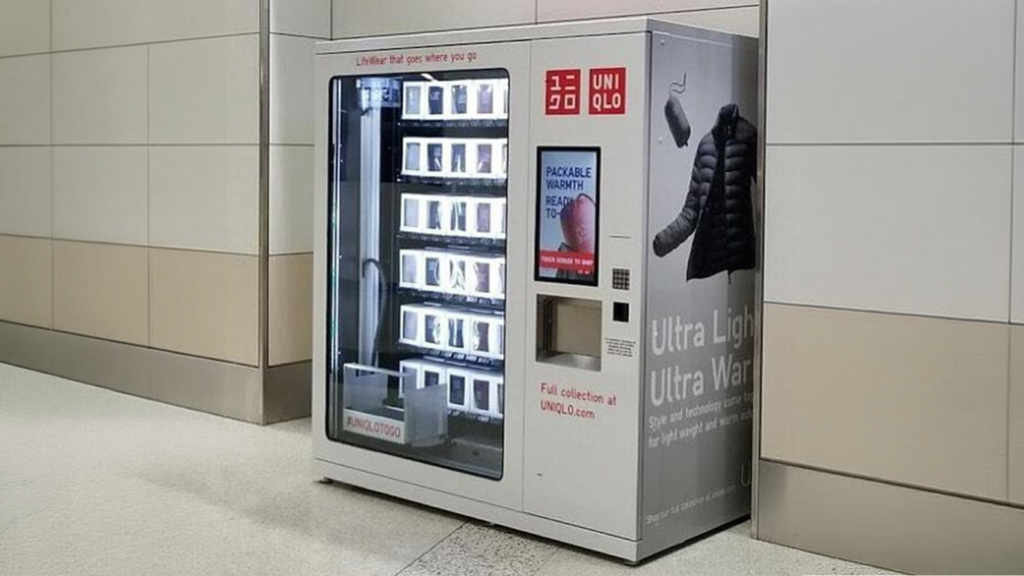
Source : Uniqlo’s Vending Machines
The Problem with Traditional Stores
If premium locations are so lucrative, why not just open a regular store? For mid-sized and debutant D2C brands, the math simply doesn’t add up because of –
- Capital Lock: Renting a standard 500 sq. ft. store in a premium Mumbai or Bengaluru mall can require high security deposits, fixed monthly rentals and upfront fit-out costs, locking significant capital before the brand sees any sales momentum.
- Operational Burn: You have to hire, train, and manage retail staff, set up complex point-of-sale (POS) systems and absorb utility bills.
- The Agony of Red Tape: Getting design approvals, structural permissions, and electrical sign-offs from airport authorities or mall management can take several months. By the time your doors open, market trends may have already shifted, but you are way too invested to change.
Smart Alternatives to Physical Stores
To dodge these operational hurdles, brands are shrinking their retail footprints into these high-impact, low-overhead micro-formats –
Pop-Up Kiosks
As offline distribution channels for D2C brands, pop-up kiosks are beautifully designed touchpoints placed in mall walkways or terminal corridors. Utilizing short-term leases, they allow brands to test a physical market for 3 to 6 months without long-term legal and financial commitments.
QR Code-Based Shopping
The ultimate inventory-free model. Brands set up minimalist, eye-catching digital signage or posters featuring high-resolution product catalogues. A customer simply scans the QR code, browses the curated collection on their smartphone, pays online, and the product is shipped directly to their doorstep.
Experience Booths
An experience booth focuses purely on sensory interaction. Customers can sample textures, smell fragrances or try on digital variations via AR mirrors. They later complete the purchase digitally via an app or QR code, eliminating the need for back-room stock handling.
Smart Vending Machines
The fastest-growing segment of automated retail, these are intelligent, IoT-enabled, interactive digital kiosk that act as micro-stores operating entirely without human intervention.
What Are Smart Vending Machines for D2C Brands?
Automated vending machines for brands are mini-retail storefronts packed into a 4×4-foot footprint. Here, the customers browse products on a digital screen → make payment → collect the product instantly.
At present, most modern smart vending machines support advanced features like –
- Touchscreen interfaces
- Act as digital signage for brand promotions
- UPI and cashless payments
- Real-time inventory tracking
- Remote monitoring systems
Smart vending machines are available in different hardware variants, while the branding, digital display and customer interface can be customized to reflect the brand experience. This gives D2C brands the flexibility to choose a machine format suited to their product category and then build a branded retail presence around it.
Today, the scope of vending machines is moving well beyond traditional F&B categories. Smart vending is now being explored for:
- Beauty and skincare products
- Snacks and beverages
- Electronics accessories
- Travel essentials
- Wellness products
These machines are especially relevant in high-footfall locations such as airports, shopping malls, metro stations, corporate parks and universities, where customers value quick access, convenience and self-service buying.
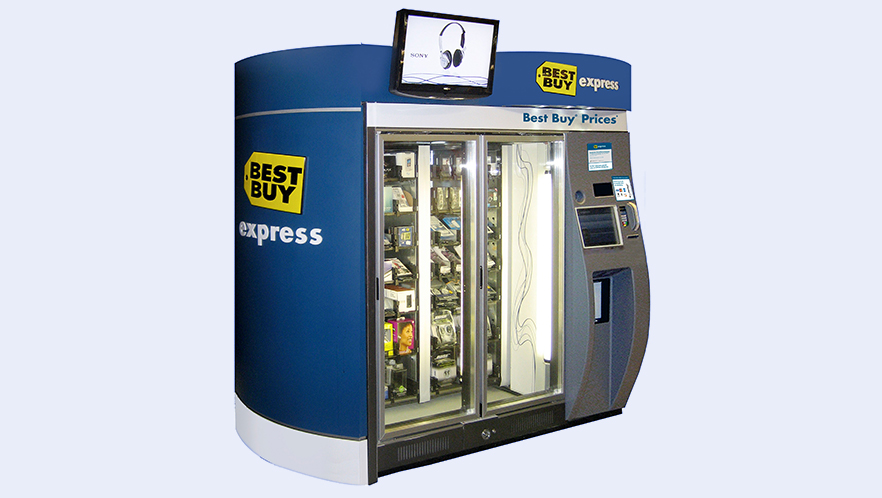
Source : Best Byu vending machines
Why D2C Brands Are Using Smart Vending Machines
The operational economics of smart vending machines are heavily stacked in favour of D2C brands. Why?
- Lower Staffing Dependency: Smart vending allows brands to create a physical retail presence without needing dedicated sales staff at every location, reducing the cost and complexity of staff hiring and training.
- 24/7/365 Operations: In transit hubs and high-footfall locations, smart vending machines can keep products accessible beyond standard store hours, helping brands serve customers during early morning, late-night and peak travel periods.
- Faster Deployment: Vending units take a shorter time frame from concept finalization to going live compared to the months required for traditional store setups.
- Data Goldmines: Because they are fully connected to the cloud, brands get real-time inventory alerts and instant data analytics on exactly which products are selling, in which season and at what time of day.
Vending Machine vs. Pop-Up vs. QR Retail
| Cost Factor | Traditional Stores | Smart Vending Machines |
|---|---|---|
| Space Required | 300 to 1,000 sq. ft. | 10 to 20 sq. ft. |
| Staff Requirement | 2 to 4 staff members per shift | No dedicated on-site sales staff |
| Monthly Rent | High fixed mall or airport lease | Lower footprint-based commercial cost |
| Operating Hours | 10 to 12 hours per day | Extended access beyond regular store hours |
| Setup Time | 6 to 9 months, vary based on location | Faster deployment compared to a full store |
| CAPEX | High investment in interiors, fixtures and operations | Lower setup investment compared to a full store |
| Inventory Requirement | High inventory requirement for full-store assortment | High velocity SKUs, Impulse-friendly products. |
| Marketing Visibility | Large storefront and in-store branding | Branded machine, digital screen and product display |
| Data Collection | Limited or manually tracked | Real time sales, inventory and customer interaction insights |
Each format offers unique strategic advantages depending on a brand’s budget and inventory goals:
Benefits for D2C Brands
Asset-light retail formats offer several advantages for modern D2C businesses, like –
- Enter premium locations without heavy investment
- Build offline presence quickly
- Test products before large-scale expansion
- Increase impulse-driven sales
- Strengthen omnichannel growth strategies
What works best is that these formats allow brands to run real-world A/B testing – place a machine, see what products move, gather consumer insights and optimise the product mix instantly.
If a location underperforms, you don’t need to break the lease; you simply unplug the machine and move it to a higher-traffic corridor.
Best Product Categories for These Models
The most successful items in unattended retail are compact, high-margin, visually distinctive, convenience-based and very importantly, FOMO-driven.
The strongest performers are –
- Skincare and beauty products
- Snacks and beverages
- Electronics accessories
- Travel essentials
- Wellness products.
Real-World Use Cases in India
In India, the shift is still developing, but it is clearly accelerating. Beauty brands are beginning to explore vending machines in malls and high-footfall zones for instant access to cosmetics and skincare, while snack and beverage brands are using automated retail in transit hubs to capture commuter traffic.
Airports are also becoming a strong use case for personal care and electronics vending, especially where convenience matters more than assortment depth. QR-based catalogues and digital product discovery are also appearing in lifestyle stores and experience zones, connecting offline attention with online fulfilment.
A notable Indian example is Bummer, which made its quirky innerwear available through vending machines at Ahmedabad airport. Xiaomi is another relevant example in India, where compact electronics and accessory-led formats fit well into automated retail and high-traffic environments.
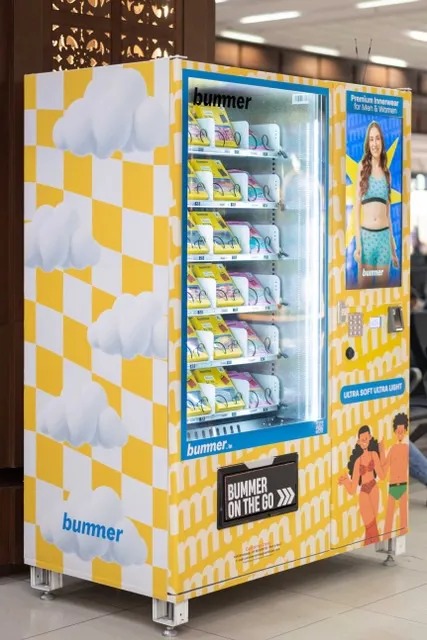
Source : Bummer Smart Vending Machines
Cost & ROI Breakdown
Smart vending gives brands a more controlled way to enter physical retail, test customer response, and measure performance across high-footfall locations.
Instead of committing to a large-store format, brands can use a focused retail footprint to understand which products sell, which locations perform, and how customers engage with the brand offline.
For D2C brands, this creates clear business advantages:
• Controlled Retail Investment
Brands can create an offline presence with a focused format built around selected products, branding and placement.
• Focused Inventory Deployment
The machine can carry strictly controlled, high velocity SKUs suited to the location and customer need.
• Lower Operational Dependency
Smart vending reduces the need for dedicated on-site sales staff and daily store supervision at every location.
• Measurable Performance
Brands can track sales, product movement, replenishment needs and location-level performance.
• Scalable Market Testing
Once a product mix and location show a strong response, brands can explore similar high-footfall locations with greater confidence.
Navigating Challenges
While unattended retail is highly efficient, it has several operational hurdles like –
- Limited product capacity in vending machines
- Maintenance and restocking logistics
- Approval processes in premium locations
- Customer awareness gaps in emerging markets
- Dependence on location footfall
Strategic assistance from automated retail solution providers can ease these hurdles at the very onset.
Hybrid Strategy: The Smartest Approach
The most successful D2C brands don’t rely on just one channel. They combine these formats into a unified, powerful hybrid ecosystem.
For example, a brand may deploy
- Smart brand activation vending machines for instant purchases
- QR retail for extended product catalogues and,
- Pop-up stores for immersive brand storytelling
This approach allows brands to balance visibility, convenience, customer engagement and scalability simultaneously.
Future Trends
As technology accelerates, the line between software and physical commerce in D2C brands offline expansion will blur completely. We are already seeing the integration of AI-powered smart vending machines that analyse real-time external variables such as weather or terminal delays to dynamically adjust displayed promotions.
With UPI payments forming the baseline of Indian commerce, transactions are completely frictionless. The future points toward hyper-personalized automated retail expanding in Tier 2 and 3 cities, where scanning a QR code instantly syncs the machine with D2C apps and loyalty programs, serving personalized recommendations and more.
Traditional retail stores are no longer the only path to offline expansion as brands are learning how to sell products without a retail store.
For D2C brands in 2026:
- Smart vending machines offer automation and impulse-driven sales
- QR retail enables low-cost scalability
- Pop-ups create immersive brand experiences
The brands winning in offline retail today are not necessarily the ones opening the biggest stores. They are the ones building flexible, automated, and hybrid retail ecosystems that meet customers wherever they already are.