
Indian consumers are paying premium prices for D2C electronics even when cheaper alternatives flood marketplaces.
The reason? In 2026, buying decisions aren’t just about the product. They’re about premiumization and experiential value.
India’s D2C electronics market is booming, but winning a loyal customer base is no longer about price or brand; it’s about experience.
Traditional electronics retail relied on shelf presence, distributor networks and mass advertising.
Today, though, D2C electronics in India is powered by real-time engagement, community validation, personalization, and seamless buying journeys. They are building ecosystems, not just selling products.
And at the centre of this shift? A new retail system called phygital retail India, where online intelligence meets offline accessibility through experiential stores, interactive kiosks and smart vending machines.
The Rise of D2C Electronics in India
Direct-to-consumer brands are rewriting the rules of engagement.
D2C electronics commands 35% of the D2C market in India, estimated at USD 108.76 billion this year (2026). This growth has found explosive momentum with Brands bypassing distributors and retail chains to speak directly to consumers.
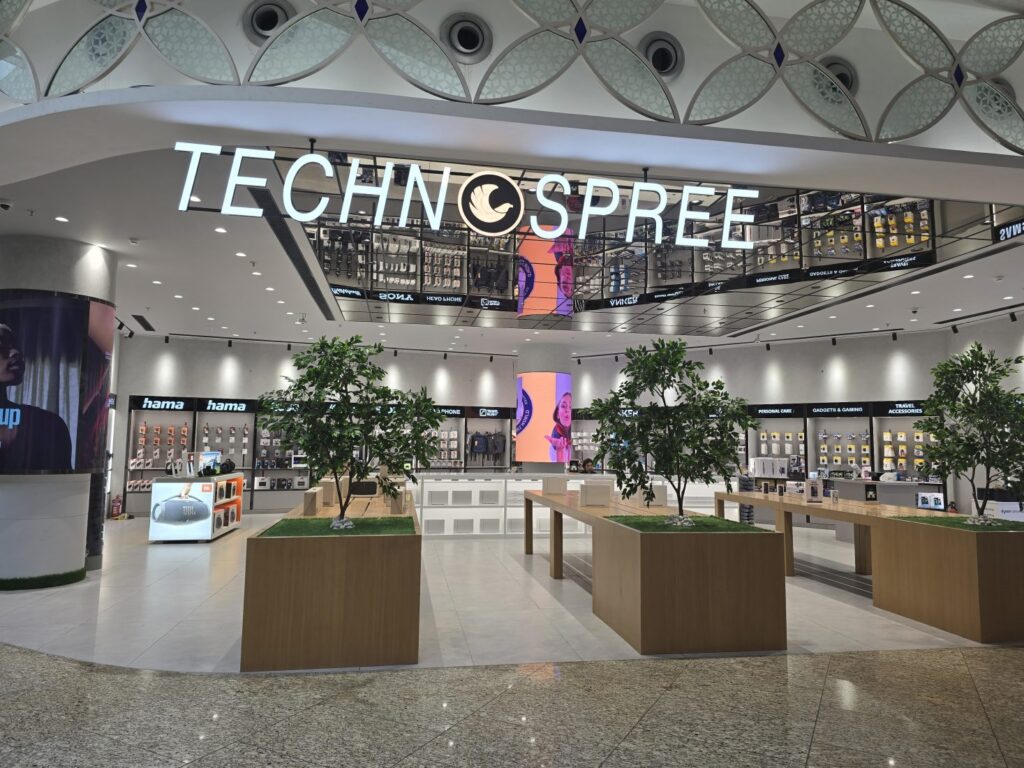
Source : TechnOspree electronics
Key Electronic Brands That Emerged as D2C Growth Drivers
boAt – Based on youth-focused branding and direct online availability, bypassing middlemen to lower costs and tweaking products with direct customer insights, boAt has positioned its brand profitably, earning annual revenue of INR 3097.8 crores, FY 2025.
Noise – Maintaining a strong TWS/wearables positioning, Noise focuses on youth-centric campaigns using micro-creators, relatable influencers, experiential trial zones, ambassadors (like Virat Kohli/Tapasee Pannu) and emotional storytelling like ‘Track your wins – Not steps’ to capture the market.
Realme and 1MORE India have also set an upward growth trajectory in the D2C electronic spectrum in India.
These brands exemplify how D2C headphone brands in India are scaling rapidly through:
- Direct engagement via apps and websites
- Transparent pricing (no distributor markups)
- Faster product iteration cycles
- Quick delivery through e-commerce and quick commerce
- Immediate customer feedback loops
Unlike traditional models, Indian electronic brands, especially Indian D2C headphone brands, own the entire journey, from discovery to after-sales support.
The result? Higher margins. Deeper data. Stronger brand loyalty.
Why Customer Experience Matters More Than Ever?
Today’s consumer values personalization, support and convenience over legacy brand names.
Modern buyers, especially of personalized tech accessories, are informed. They compare reviews. They expect seamless support. They demand convenience.
So, for customer experience, D2C brands depend upon:
- Fast, responsive customer service
- Clear warranty and replacement policies
- Personalized recommendations
- Engaging post-purchase journeys
- Community-led brand building
Therefore, D2C brands are no longer competing on ads. They are competing on:
- Trust
- Responsiveness
- Data intelligence
- Experience design
And this is where phygital innovation changes the game.
Phygital Retail: Blending Online & Offline Experiences
Phygital retail India bridges digital discovery with physical interaction. It reduces friction while increasing engagement.
Experiential Stores & Demo Zones
Stores are evolving into engagement hubs.
Modern D2C stores are experience centers. Instead of selling, stores now help customers explore, test, try and decide.
For example, electronics brands using phygital strategies enable
- Headphone demo zones for real-time sound testing
- Interactive kiosks for feature exploration
- Live product comparison screens
- Guided tech assistance for first-time buyers
Audio products benefit enormously from physical demos of sound testing; something purely online shopping cannot offer.
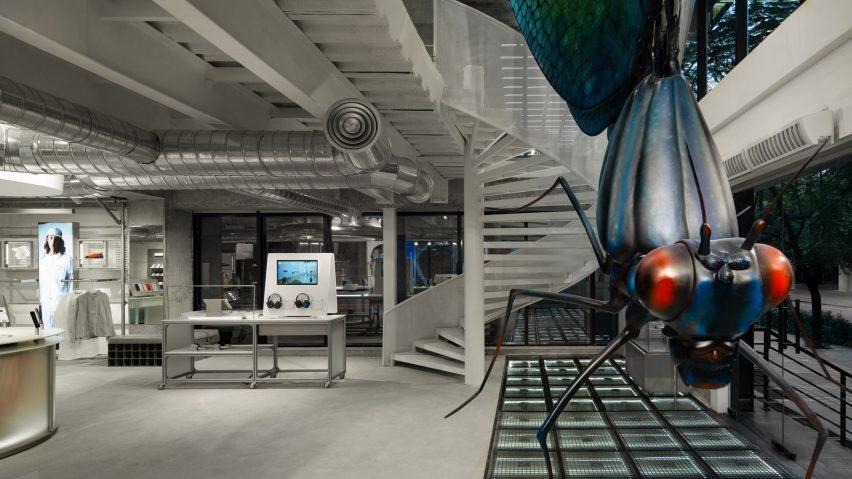
Source : Nothing Store in India
Smart Vending Machines as Mini-Experience Hubs
This is a powerful phygital touchpoint that enables instant access, interactive information, and data intelligence across malls, airports, metro stations, and campuses.
Unlike traditional vending machines, automated kiosks are:
- Touchscreen-enabled
- QR-integrated for product information
- AI-powered for recommendations
- Connected to online inventories
- Integrated with loyalty systems
What makes them powerful?
- Instant purchase in high-footfall locations
- Try before you buy with demo displays
- Omnichannel pickup points
- Real-time stock updates
- Data collection to improve products with analytics
Imagine a consumer can discover earbuds online, test them at a mall kiosk, but purchase them at an airport through an interactive vending machine.
This is phygital retail India in action.
Omnichannel Integration
Here, seamless transitions between online platforms, offline stores and smart vending machines create frictionless experiences.
Consider this: in omnichannel electronics retail, the journey is continuous, where –
- Customer browses online
- Then orders via website or app
- Collects via smart vending machine at a convenient location
- Registers warranty on app
- Receives personalized offers
No disconnected channels. No friction. Only a unified ecosystem where brands make convenience their competitive edge.
Personalization & Data-Driven Customer Engagement
Custom Recommendations
D2C brands have a key advantage – direct access to consumer behaviour.
Brands can thus fine-tune/tweak products, zeroing in on sound preferences, purchase history and browsing behaviour.
For customer experience, D2C brands deliver custom benefits like –
- Fitness enthusiasts can get integrated earphones and wearables
- Streamers can access personalised Gaming headsets
- Travel-friendly noise-cancelling headphones for travellers
- Style-driven limited editions for the young and the ever-curious
This takes brand-experience from generic to curated. Hyper-personalized journeys start here.
AI & Analytics for Loyalty
Loyalty is a data strategy, and AI turns customer data into repeat revenue.
Every click, scan and purchase generates signals. AI systems analyze these signals in real time across smart vending machines, online platforms, mobile apps and in-store interactions.
This allows brands to:
- Detect buying patterns
- Predict upgrade cycles
- Recommend relevant products
- Trigger precision-timed offers
- Design targeted campaigns and loyalty tiers
- Reduce churn before it happens
AI analysis of customer data and forecasting can reduce inventory errors by 20% – 50%, ensuring high-demand products are always in stock.
For customer experience, D2C brands use AI to shift engagement from reactive campaigns to predictive relationships.
Less guesswork. More retention. Smarter growth.
Community & Social Engagement:
Building Brands That are Of-The-People; or-the-People; By-the-People
Loyalty grows when customers feel part of a tribe.
From micro-influencers to smart vending brand activations – ‘community’ becomes a consistent growth engine.
Micro-Influencers & Reviews
Why do D2C electronics brands collaborate with micro-influencers?
This 10K to 100K bandwagon offers 3x–5x higher engagement rates (2.5%) compared with macro and mega counterparts (1.5% and 1%, respectively). The collaboration brings higher story-views and link-clicks as well, at an agreeable price.
D2C electronic brands, especially for fast-moving products like TWS/Wearables, get educational content and authentic reviews from Tech reviewers, Fitness influencers, Gaming streamers, and even Campus ambassadors with deep emotional connections, which build lasting trust and retention. (Ref )
Offline Experiences That Strengthen Online Loyalty
Real connections deepen when customers experience brands beyond their feed.
This is where phygital activations step in. Phygital activations often include:
- Product launch events
- Sound-testing workshops
- College campus activations
- Smart vending machine brand campaigns
These initiatives position D2C electronics in India as community-driven brands, not distant corporations, converting first-time buyers into brand advocates.
Case Studies: Experience in Action
boAt
Positioning themselves as the ‘Zara of Electronics’ boAt went from a community of 800,000 boAt-heads in 2018 to 3million + post 2020, blending their youth-centric hyper-tweaked lifestyle branding with personalization and social campaigns.
Campaigns like #dowhatfloatsyourboat attracted 100+ micro-influencers, leading to massive social media engagement. (Ref)
boAt also activated limited-edition collaborations to create continuous engagement beyond online platforms.
Noise
Noise has aggressively integrated with quick commerce platforms like Blinkit and Zepto to reach customers instantly, where they are, achieving 50% market share in the wearables category. (Ref)
Phygital elements like AR try-ons, live product testing and in-store trials led to high engagement. Furthermore, customers can test wearables in-store and receive same-day delivery, blending speed with interaction.
Smart Vending Activations
In 2019, Xiaomi launched smartphone vending machines at Bengaluru’s tech parks, becoming India’s first tech brand to experiment with automated retail. The Mi Express Kiosks offered instant purchases with transparent pricing, matching their online and offline stores. While innovative, the initiative proved that automated electronics retail needs more than just convenience; it requires brand trust and experiential value to drive purchases.
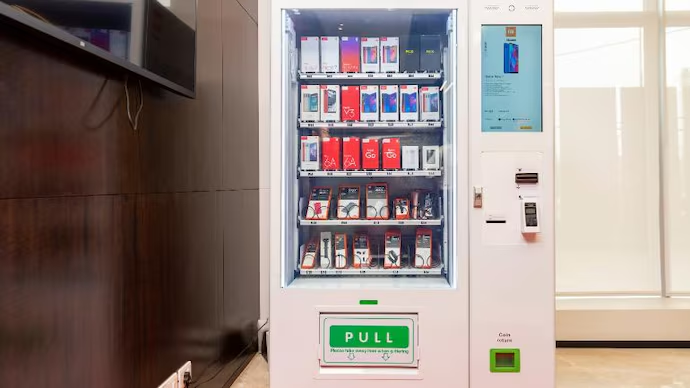
Source : Xiaomi India / Mi Express Kiosk
Key Takeaways
Experience is the new competitive moat in D2C electronics.
One clear takeaway from India’s D2C electronics shift is that experience is the real engine of growth. Their key strategies for expansion should focus on it.
What winning brands have already adopted as their success principles?
- Customer experience drives brand differentiation in D2C electronics in India.
- Phygital ecosystems reduce friction and improve accessibility.
- Smart vending machines in India can create high-impact micro touchpoints.
- Omnichannel electronics retail strengthens brand continuity.
- Data-led personalization builds loyalty and repeat purchase.
- Community engagement deepens brand affinity, and it’s here to last.
For the future of customer experience, D2C brands are ‘designing journeys’, not just transactions.
Engineering The Experience Economy – Where Phygital = Growth
Retail is no longer a channel. It’s an ecosystem of experience, personalization and data intelligence.The next phase of D2C electronics India growth will not be won through discounts alone.
It will be driven by sweeping transformations in:
- Seamless omnichannel journeys
- Phygital retail India integration
- Smart vending machines
- AI-powered personalization
- Community-led engagement
Brands that invest in intelligent touchpoints, especially tested scalable phygital solutions like smart vending machines, will stay ahead in an increasingly competitive D2C electronics landscape.
Because when experience converts, loyalty compounds.