
What this means for D2C beauty brands and how they can win in 2026 through smarter hybrid retail strategies
India’s BPC industry, valued at USD 28 billion in 2025, generated 72% (USD 20.16 billion) from offline retail and 28% (USD 7.84 billion) from online platforms.
Now, imagine this: in a country where smartphones are everywhere, and apps like Nykaa and Myntra dominate, 72% of beauty sales in India – think perfumes, skincare and cosmetics – still happen offline.
Given that BPC sales through e-commerce and quick-commerce have grown significantly, e.g., 39% between June and November 2024, in comparison with the previous year, BPC’s digital hype against brick-and-mortar loyalty is, in fact, paradoxical. (Ref)
Let’s unpack why the offline beauty market in India still leads, and how brands can strategically tap into both worlds in 2026.
Why Offline Still Rules the Indian Beauty Market?
The answer lies in how Indian consumers experience beauty.
Sensory Experience is Key
A Mintel report indicates that most Indian adults still shop beauty and personal care products in-store, especially across trial-led categories where touch, texture, shade, and fragrance matter.
Indian buyers love
- swatching colour cosmetics in real light,
- feeling textures on their skin, and
- sniffing fragrances before committing to purchase.
That’s where physical stores win, offering testers and personalized recommendations by in-store experts; something online platforms cannot replicate. This sensory confidence, cultivated through experiential marketing in cosmetics, becomes the final push towards purchase.
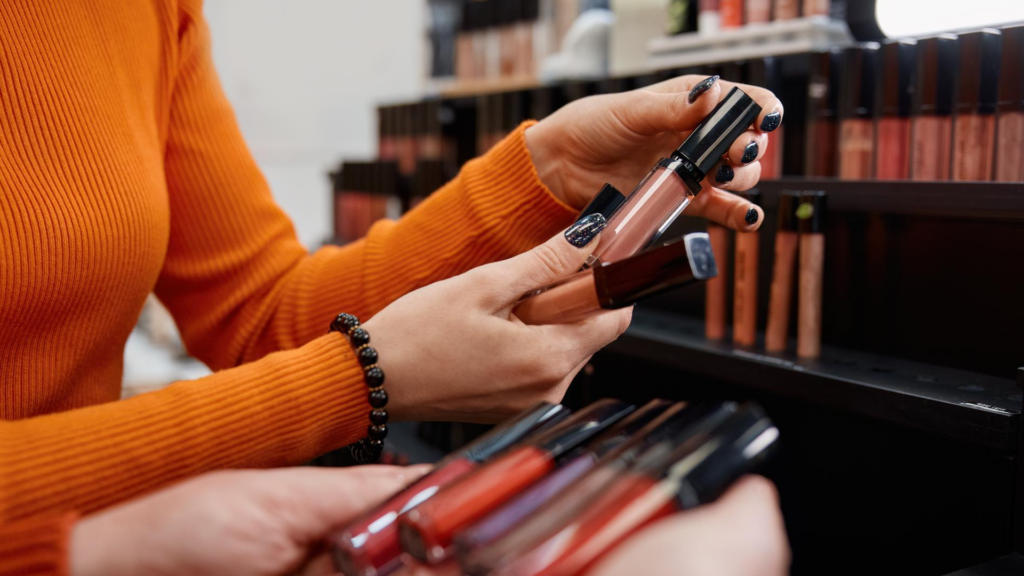
Source : Cosmetics Makeup Store
Trust and Brand Credibility
Counterfeit concerns remain real. One source estimates that nearly 25 to 30% of products sold in Indian markets may be spurious or counterfeit, and around 1 in 3 Indian consumers has unknowingly purchased a fake cosmetic product at least once.
When it comes to the credibility of D2C beauty brands in India, 2026 –
- Physical stores feel more reliable
- Concerns about counterfeit products are addressed on-the-spot
- In-store staff provide reassurance and guidance
For many consumers, especially first-time buyers, offline retail reduces perceived risk in a market where consumers are willing to pay 9% premium on guaranteed authentic products.
Immediate Gratification
Want it now, get it now is an emerging expectation which offline beauty market in India offers seamlessly –
- No waiting for delivery
- Instant ownership
- Strong impulse buying triggers through displays and offers
And in a category like beauty, that immediacy often drives conversion
Cultural and Social Factors
In India, beauty shopping often carries a strong social and experiential dimension, especially in malls and shared retail environments where browsing, discovery, and group decision-making happen together.
The offline beauty market in India is basically an experience where –
- Mall visits double up as social outings
- Beauty shopping with friends or family becomes a memory and,
- Discoveries happen organically while browsing through shelves
Offline spaces bring an emotional and social layer that online spaces struggle to replicate.
These behaviours are evident in evolving Tier 2 and 3 city beauty trends, where retail is deeply community-driven.
Barriers to Online Adoption
D2C beauty brands in India, 2026, are growing online, but hurdles persist.
- Authenticity concerns continue to slow online adoption, especially for first-time buyers.
- Return processes can feel tedious and time-consuming.
- Delivery delays in non-metros can weaken purchase confidence.
- Limited sampling options make it harder for shoppers to commit in categories like fragrance, skincare, and colour cosmetics.
Result? Offline still holds 72%.
Opportunities for D2C Beauty Brands in 2026
This leaves brands at the intersection of opportunity and innovation, where smart hybrid strategies can help them bridge offline trust and online scale.
Experiential Offline Touchpoints
D2C brands don’t need massive stores; they need experiential offline touchpoints like pop-ups.
Prioritising customer connection, pop-up shoppers have shown 38% higher 12-month retention (global average) and increased revenue by 35% for retailers compared to their regular operation. (Ref)
This matters because experiential marketing in cosmetics, like pop-ups, is associated with stronger retention and revenue outcomes, while brands such as Mamaearth have also reported strong topline growth as they expand their presence and relevance in the category.
Sampling zones, demo stations and influencer-led activations further contribute to lasting loyalty.
Innovative Vending Machines
Located in high-footfall areas like malls, airports, and metro stations, smart vending machines offer quick access to curated, travel-sized products, enabling impulse purchases on the go.
This is a Game-changer.
Key advantages:
- 24/7 availability
- Lower operational costs
- QR-led integrations for loyalty and subscriptions
These upselling techniques can increase average transaction value by 15% to 40%, showing how smart vending machines can support stronger impulse conversion.
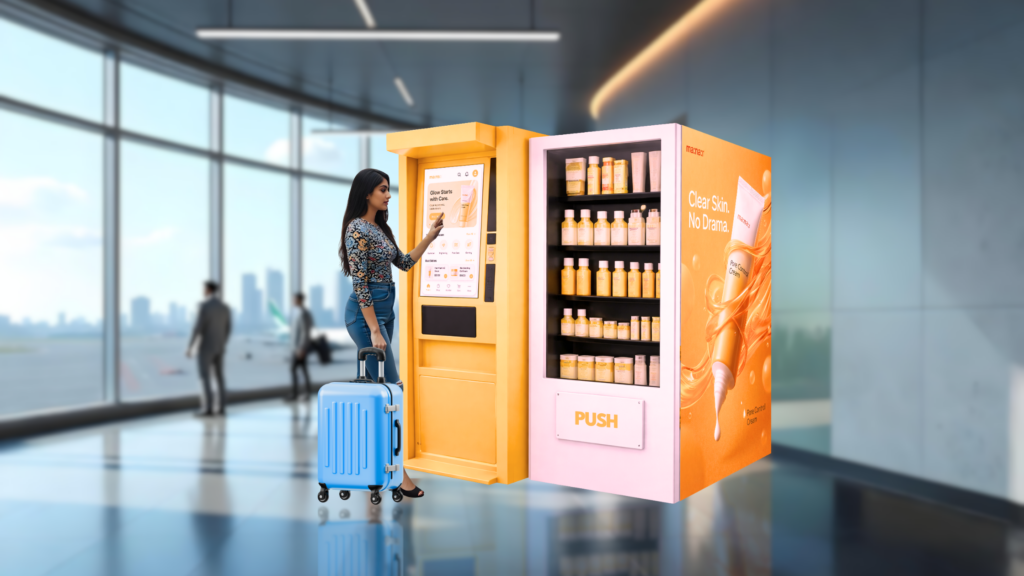
Hybrid Model: Online + Offline
It’s about buying online and picking up anywhere – at stores or at vending kiosks.
Key highlights of hybrid models include –
- Click-and-collect convenience
- AR-based virtual try-ons
- Offline pickup and real-world sampling
This is a mapped convenience that delivers CX and reduces returns.
Tier 2 & 3 Market Expansion
The next wave of growth will come from Tier 2 and 3 cities.
Brands need to build –
- Offline-first strategies around Tier 2 and 3 beauty trends for awareness
- Localized retail to improve accessibility
- On-ground education to build confidence in brand and product
Subscription & Loyalty Programs
Acquisition is great, but retention is where real growth happens.
For this, brands can offer
- Personalized subscription boxes
- Loyalty programs linked to apps
- Offline touchpoints feeding into digital ecosystems
- Connected shareable experiences with smart vending kiosks
Case Studies / Examples
Indian BPC brands need to make a phygital, hybrid shift to win in 2026 and beyond.
For example, Nykaa’s Luxe store at Phoenix Palladium shows how phygital beauty retail is evolving in India. With AI-powered virtual try-ons, personalized skin consultations, immersive brand zones, and in-store services, the format blends physical discovery with digital intelligence to create a richer beauty experience.
Image : use above link for the image
Similarly, Plum Goodness used data-driven personalization to strengthen loyalty and retention, delivering a 1.7× increase in revenue from repeat purchases, 130% growth in website repeat purchases, and 140% growth in app repeat purchases.
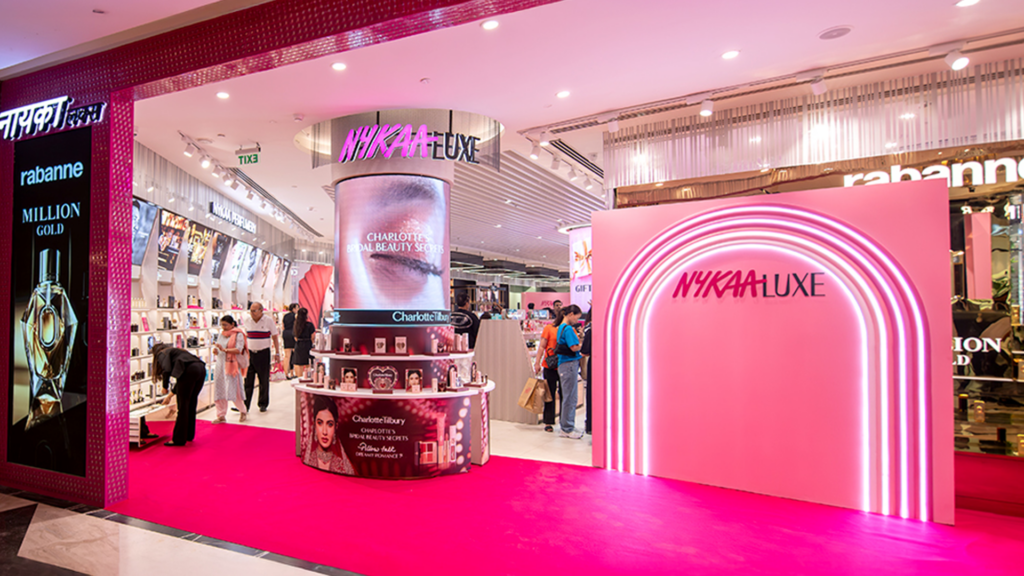
Source : Nykaa’s Luxe store
Conclusion
So, is offline going anywhere? Not anytime soon because the trust, experience and immediacy it offers are yet to be matched.
However, D2C beauty brands in India, 2026, shouldn’t forget Gen Z, the ‘truly phygital generation’ that impacts over USD 860 billion in consumer spending across all categories. Staying relevant to this hub of purchase potential would require Indian D2C brands to slowly blend in hybrid strategies with off-line expansions, not just in tier 1 but in tier 2 and 3 cities as well.